Docker -- the open-source application container technology that has drawn broad interest from the enterprise IT industry -- recently marked its second birthday since its creation and launch in March 2013 by developer Solomon Hykes and his company, dotCloud, which was renamed Docker, Inc., for the technology in October 2013.
Judging by its growth and traction thus far, and the example set by open-source projects such as Linux, Hadoop, Android, OpenStack, and Cloud Foundry, we expect big things from this young open-source project and community.
The Docker technology is being embraced by developers, prioritized by large enterprises, and questioned by central IT teams. But all the hype aside, there are real signs of disruption driven by Docker's growth and outlook. Docker recently broke into the 'exciting vendor' category in IT buyer surveys by TheInfoPro, a service of 451 Research. Docker is playing a critical role in new, modernized, and migrated cloud applications, which are among the top priorities for IT pros, according to the most recent quarterly Voice of the Enterprise survey research, which taps a network of 12,500 senior IT professionals.
A survey of more than 700 industry pros on their organization's most common type of application deployment for cloud computing found that 34 percent was for deploying new applications they did not have before the cloud. Respondents also identified modernizing existing applications by moving to hosted software or SaaS (35 percent) and migrating them to the cloud (31 percent) as the most common approaches. Docker and containers will play a prominent role in these applications and efforts.
Why All the Fuss?
There are a few key drivers of Docker's traction with developers, IT operations professionals, providers, investors, and end users.
First and foremost is Docker's role as a standard amid a lack of standards for developing, packaging, and deploying applications in today's polyglot programming market of more application-layer components, such as languages, frameworks, and databases, as well as infrastructures that range from bare-metal servers and traditional data centers to virtual and cloud computing environments. This is why Docker is sometimes, albeit dramatically perhaps, described as 'next-generation virtualization'.
A second key driver of Docker's success is its simplicity. The open-source software provides an open-source runtime environment, containerization technology, and an integrated user interface, which differentiate it from traditional virtual containers. Though it is based on Linux containers, another advantage is Docker's standalone status from the operating system, which helps the technology live up to the shipping container analogy for which it was named. What's inside the container can be a variety of things, but the method and unit to package it is consistently the same. A Docker container typically consists of an application and its binaries, libraries, packages, and dependencies, and container technology makes it easier to copy differences across versions, resulting in simpler, fewer configuration scripts for different servers or infrastructures.
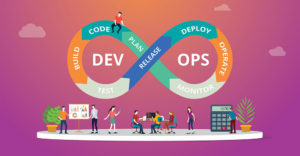
A third key driver of Docker is its ability to help delegate responsibility for applications and workloads in faster, more agile DevOps implementations that are also a growing priority for enterprise IT managers and leaders. While the whole concept of DevOps is about bringing development and IT operations pros together for a more rapid, iterative, efficient, and responsive process, our research indicates Docker and containers help organizations to effectively delineate who does what. If an issue is inside the container, it is primarily a matter for developers. If it is outside of the container, it is primarily for IT operations. While organizations do not want to continue working with silos, this type of separation of responsibility can actually help drive effective DevOps deployments.
Challenges Remain
Though Docker has the above drivers and advantages working in its favor, there are still plenty of challenges. One of the main hurdles for Docker, both the technology and the company, is its immaturity. After all, Docker is just 2 years old, and even though the market is moving faster than ever, this is fairly embryonic for an open-source project, considering Linux is 25 years old. Docker and containers also show their immaturity when compared to today's enterprise virtual machines. For example, multi-tenant VM security is well established. The same cannot be said for Docker and containers, though there is no shortage of developers, projects, and vendors seeking to address such matters.
Docker and containers' other challenges center on enterprise concerns around data management, analytics, storage, and related issues that accompany large-scale deployment. Much of Docker's and containers' use today is for development and testing. While the distance between test-and-dev to production has diminished, there are still concerns and apprehensions about Docker and containers at large enterprises, particularly among central IT teams.
Growing Cast of Players
There would need to be plenty of space at Docker's second birthday party, given the large number of developers, vendors, investors, and others participating in this rapidly evolving community and ecosystem.
451 Research is tracking several categories of players in Docker and container technology. This includes projects and vendors focused on application development using Docker, as well as development tools, data services, and other areas sometimes connected to the largest category of companies around Docker and containers: management and orchestration. That category includes projects and vendors, some of which are exclusively focused on Docker and containers, and others that are extending to Docker and containers from cloud management, orchestration, and automation.
The ships that carry Docker containers represent another broad category of projects and providers, including IaaS vendors, operating system players, and PaaS vendors, where Docker was born -- and, in some respects, is still best suited.
The varied mix of integration, partnership, and competition around Docker and containers right now also illustrates how an open-source software project can rapidly turn into an ecosystem with opportunities for both providers and end users.
Seen This Before
Given its rapid growth and broadening base of support, Docker resembles other successful open-source software projects that preceded it, including Linux, Hadoop, Android, Cloud Foundry, and OpenStack.
There are other similarities between Docker and recent open-source communities, not only in the swell of support from developers, IT operations pros, vendors, investors, and end users, but also in how the technology is making its way to market through developers and lines of business before central IT departments. Expect to see a support-and-services-driven market for Docker and containers as vendors provide the handholding needed to deploy Docker in enterprise and production environments.
Docker's simplicity differentiates it from OpenStack, which can be quite complex. This may mean a faster transition to a more product-focused market, where Docker and containers are ready out of the box for the security, certification, compliance, and other requirements of large enterprises.
Another similarity to previous open source communities and markets could indicate more mergers and acquisitions involving Docker and containers, as well as surrounding technologies and players. Just as OpenStack did, Docker has drawn in not only new startups and specialists but also the largest vendors in the industry, with rapid support, integration, and partnerships. As a result, there is an interesting mix of potential targets and acquirers to drive deals and consolidation.
Though there were concerns that the alternative Rocket technology introduced late last year was a potential sign of trouble for Docker, it actually reflects an active and vital community.
451 Research is currently taking a closer, more in-depth look at the rapidly evolving Docker and containers ecosystem and market in a long-format report to be published soon.
Happy birthday to Docker. It's already come a long way, and based on examples like Linux, Android, Hadoop, OpenStack, CloudFoundry, and others, it still has a long way to go.












 Loading ...